Table of Contents:
Understanding the core differences: Apple Pay vs Google Pay for UK merchants
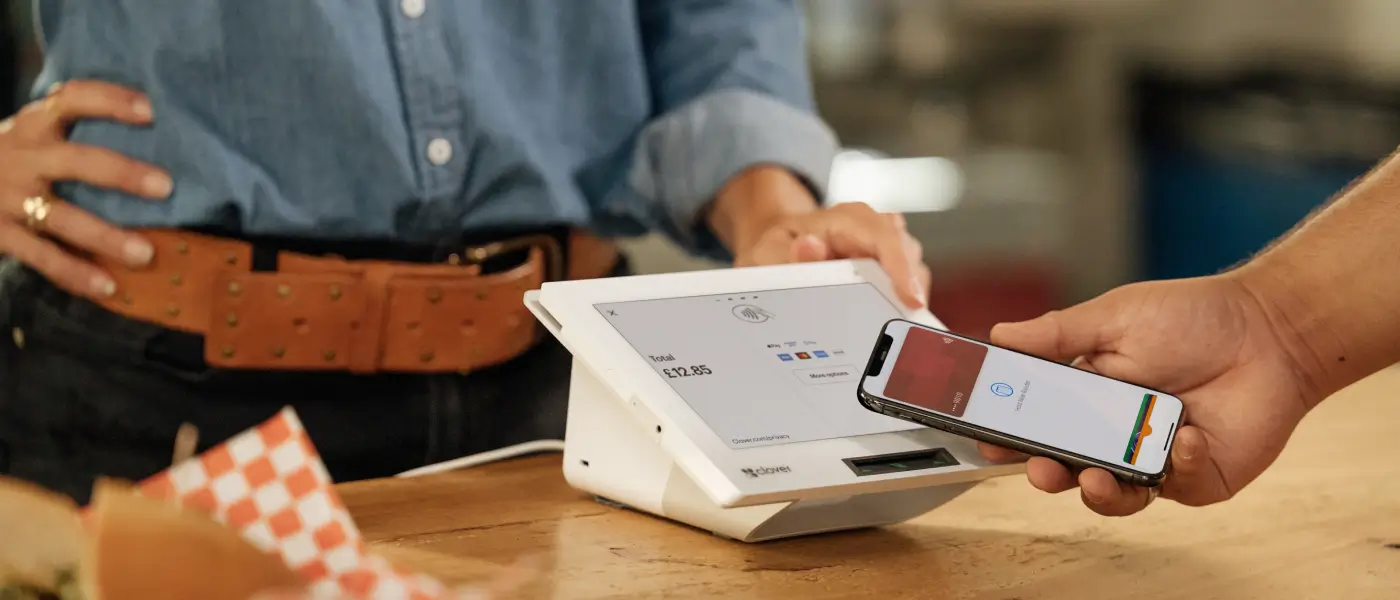
Apple Pay vs Google Pay often sounds complex. At the till, the process stays simple as both services rely on Near Field Communication (NFC) technology. From a merchant standpoint, the transaction flow looks identical. A customer taps a device and the payment completes in seconds on terminals such as Clover Flex or Clover Mini.
The difference sits in the ecosystem. Both globally and in the UK, Apple Pay operates inside Apple’s closed iOS environment, whereas Google Pay UK and global runs across Android devices from many manufacturers. Supporting both platforms gives access to a wider customer base, from iPhone users to budget Android handsets.
The wallet concept also matters, and Google Wallet vs Apple Pay shows how digital wallets store virtual debit and credit cards securely. Physical wallets see less use on UK high streets, which explains why searches for ‘what is Apple Pay’ and ‘how does Apple Pay work’ continue to rise as shoppers rely on phones rather than cards.
The key benefits of accepting Apple Pay and Google Pay in small businesses
Speed stands out first, and tap-and-go payments reduce queues compared with Chip and PIN. During peak hours, a business using Clover Station Duo processes more orders or sales per hour through Apple Pay vs Google Pay transactions. Since customer perception follows closely, accepting both options signals a modern, mobile-first mindset. Younger shoppers expect Apple Pay and Google Pay (UK and worldwide too) acceptance as standard, not as a bonus.
Spending behaviour also changes. Barclays data shows UK consumers now make over 230 contactless transactions per person per year,1 highlighting how tap-and-go payments encourage more frequent, low-value purchases. Apple Pay vs Google Pay acceptance removes the friction of forgotten wallets or cash limits such as the Apple Pay limit (UK), which aligns with standard contactless thresholds set by banks rather than the device itself.
Security and fraud prevention: How mobile wallets protect transactions
Google Pay vs Apple Pay security relies on tokenisation. Actual card numbers never pass to the merchant or sit on the device. Each payment uses a unique token, reducing exposure during data breaches. Biometrics add another security layer with Face ID, Touch ID or passcodes necessary to authenticate each transaction. This step explains why Google Pay vs Apple Pay security often exceeds standard contactless cards, which lack secondary verification.
Encrypted payments reduce risk and lower the chance of certain chargebacks tied to lost or stolen cards. Clover point-of-sales systems handle these secure transactions automatically, keeping sensitive data off business systems.
Future-proofing business operations with integrated contactless payment solutions
Cash use continues to decline in the UK while contactless payments continue to rise and dominate everyday purchases. With mobile wallets no longer counting as optional extras, integration simplifies their adoption. Clover Flex, Clover Mini and Clover Station Duo accept Apple Pay and Google Pay out of the box.
With no complex configuration necessary—and interrupting daily operations—loyalty and engagement also improve. Digital receipts and loyalty features linked to wallets help businesses stay visible after the sale. Google Wallet vs Apple Pay integrations support this ongoing connection without extra hardware.
Elevating customer experience by embracing the latest payment trends
Apple Pay vs Google Pay discussions miss the bigger picture. It is not about choosing one over another. For UK small businesses, the competitive edge comes from readiness. Accepting both options removes barriers at the point of sale, enabling customers to pay with the device already in hand. After all, it is all about making transactions quick, secure, and convenient.
Auditing existing hardware and moving to an all-in-one POS platform resolves the Apple Pay vs Google Pay debate automatically. Clover solutions support seamless payments alongside inventory and employee management, creating a smoother experience for both shoppers and merchants. Contact us today for more information on integrated solutions that support Apple Pay and Google Pay.
Bibliorgraphy
1 FinTech Magazine: Barclays: UK Contactless Payments Hit All-Time High in 2024